Image
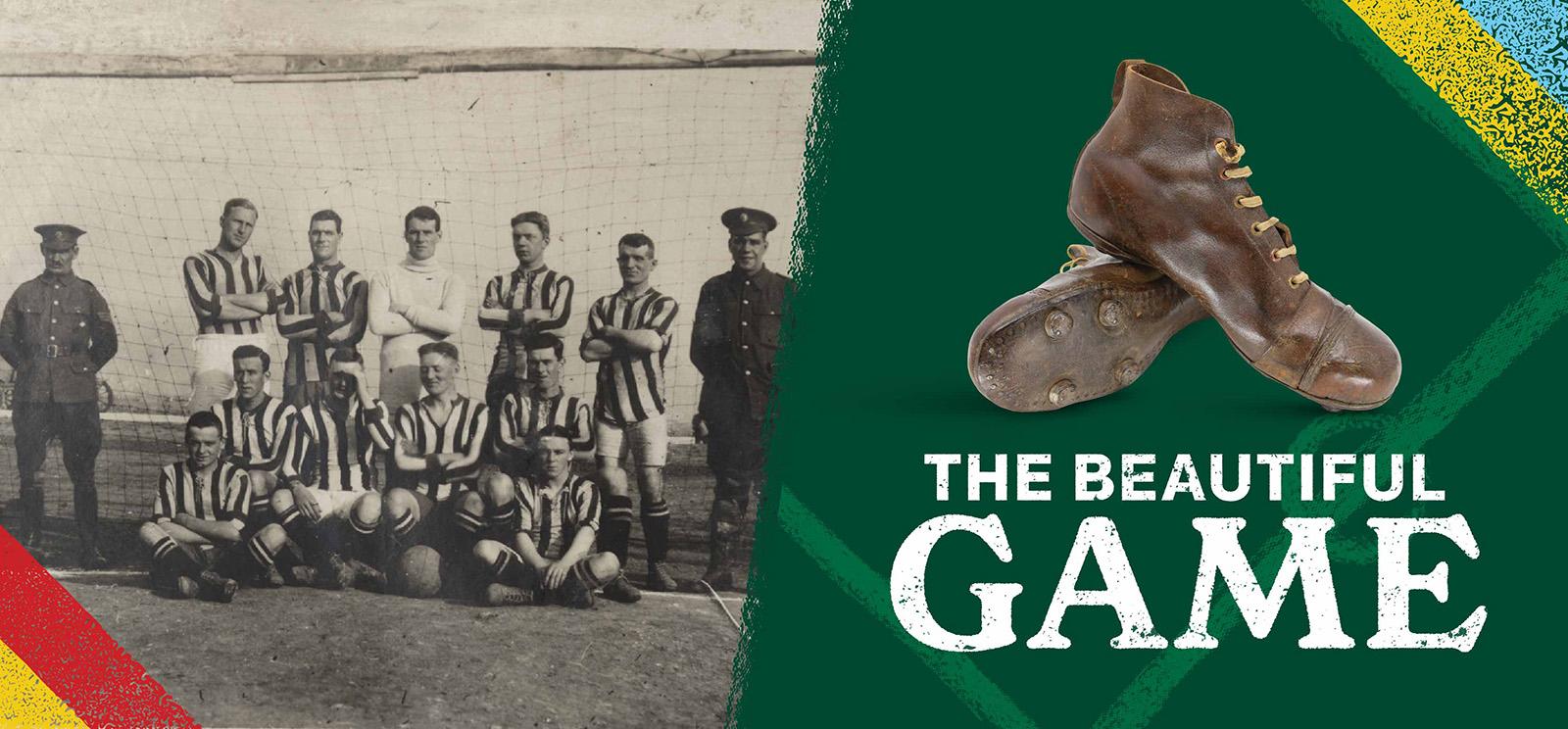
As Kansas City welcomes the world for the 2026 FIFA World Cup, football (soccer) fans from every corner of the globe will discover The Beautiful Game, an extraordinary exhibition revealing the profound connections between the world's most beloved sport and the Great War.
It is summer, 1914. Football (soccer) athletes, league officials and fans around the world were planning and preparing for kick-off – but then came the fateful declarations of war. The bugles began calling for volunteers to serve on the battlefield rather than the football pitch.
Yet “the beautiful game” had its role to play during World War I.
Numerous belligerent nations used football to recruit for the citizen armies they were raising.
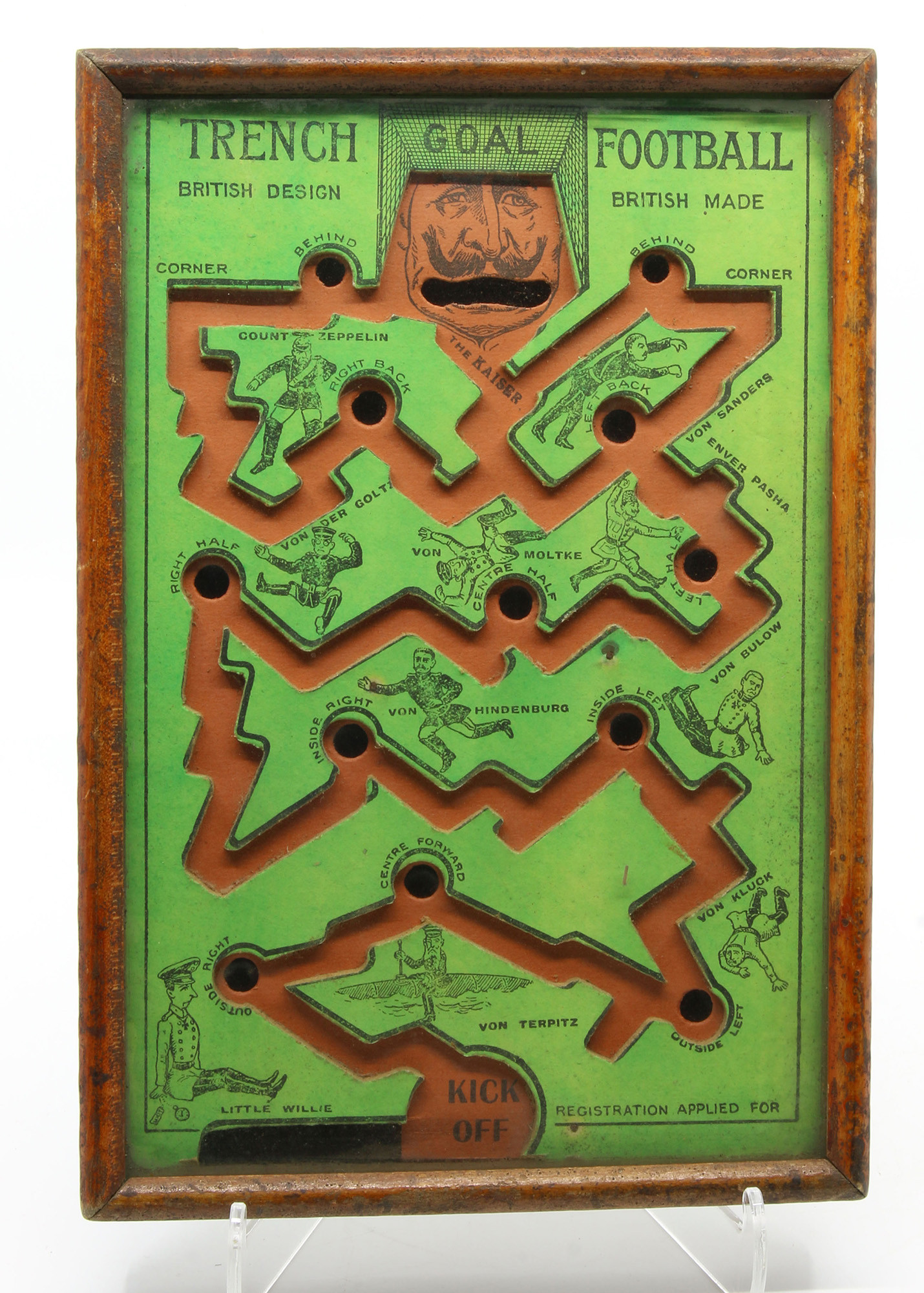
At bottom is the “kick” spot where a ball bearing starts with the goal of getting to the “goal” at the top, being an image of the Kaiser’s open mouth.

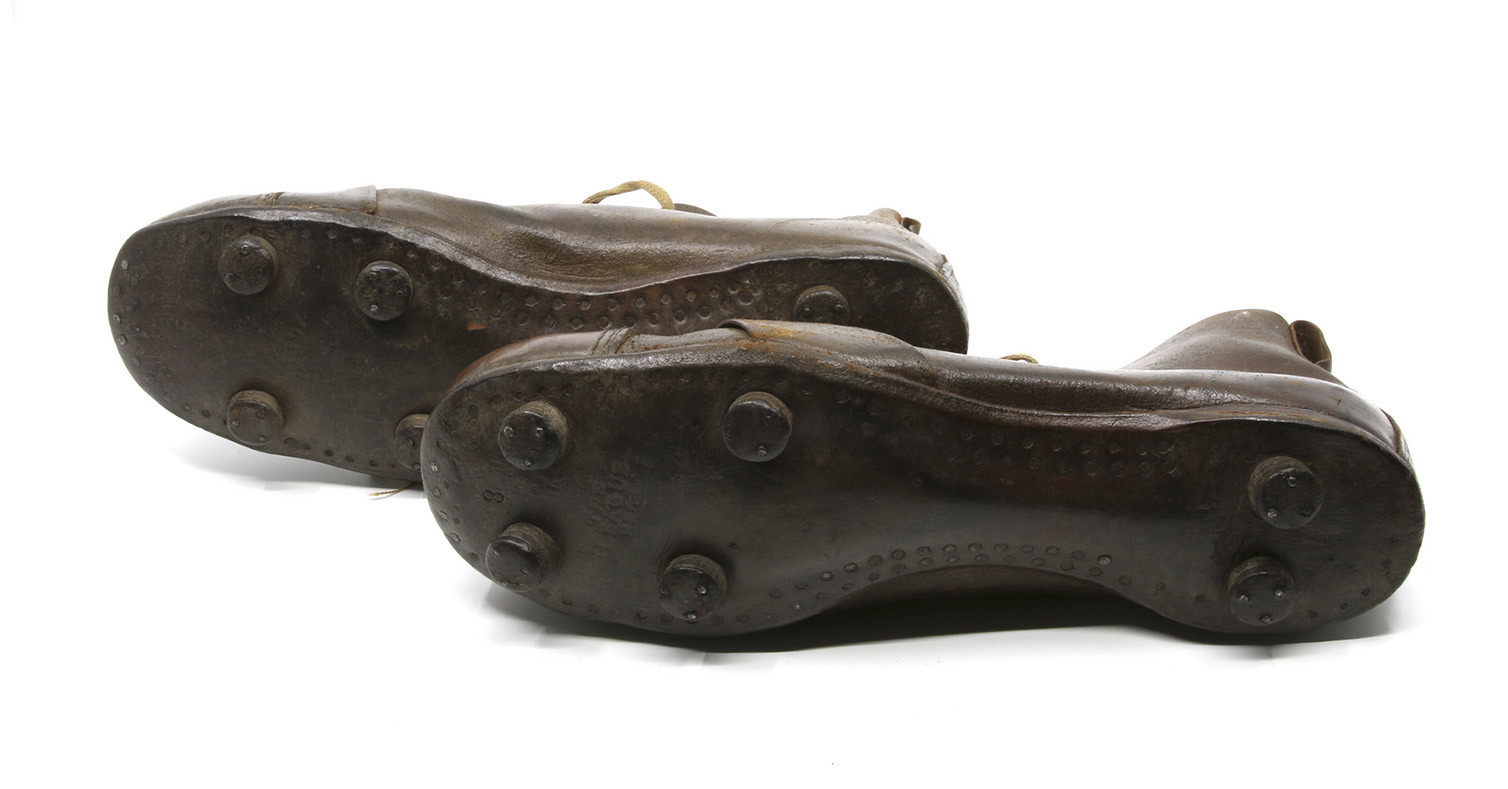
Even before the war, militaries had already been adopting football for training, fitness and esprit de corps.
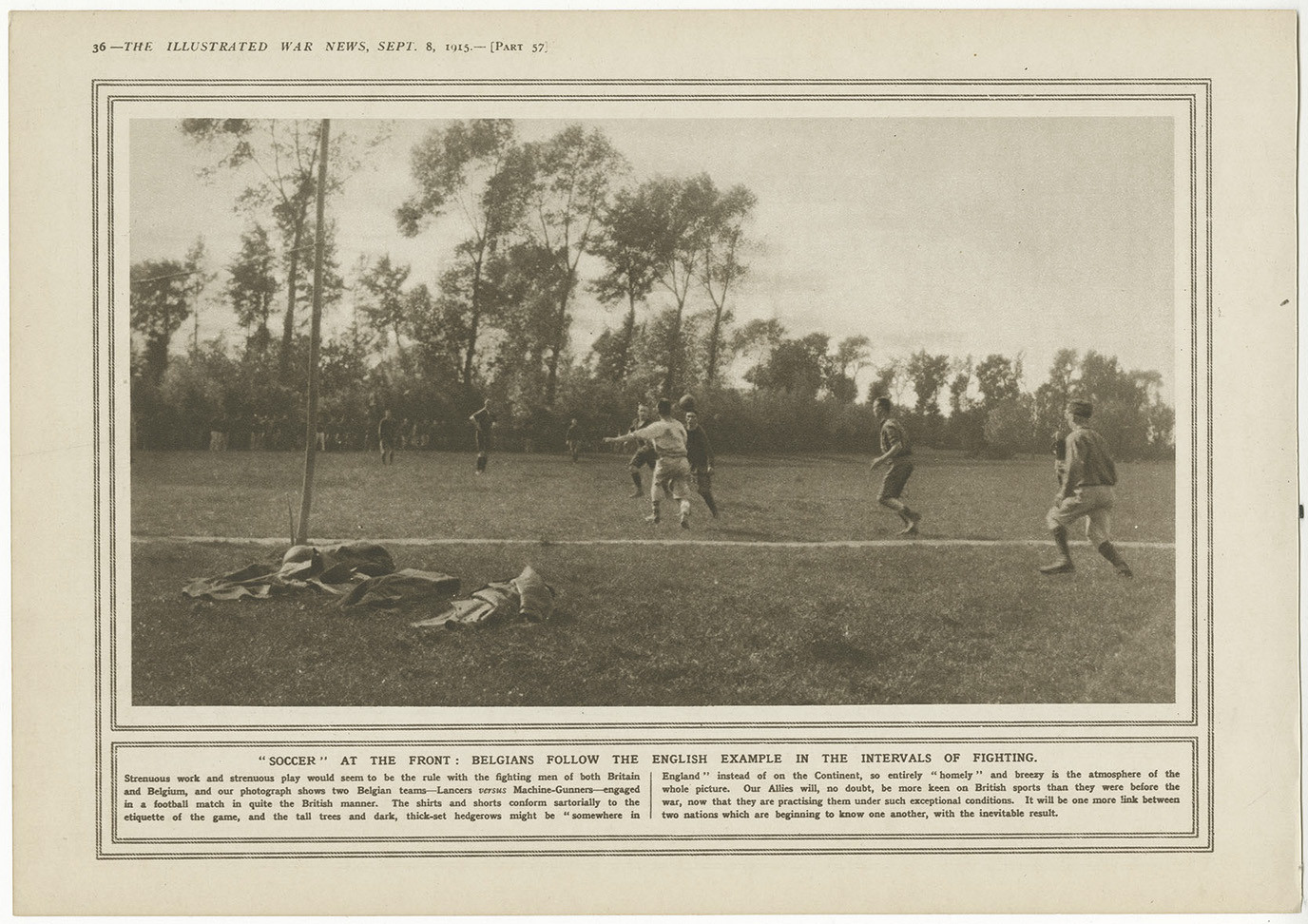

On Sept. 25, 1915, on the opening day of the Battle of Loos, the London Irish Rifles, 18th Battalion, London Regiment took a football and kicked it ahead of them as they attacked the German lines to the west of the mining town of Loos.
Photograph by Michael St Maur Sheil
Object ID: 2021.169.246
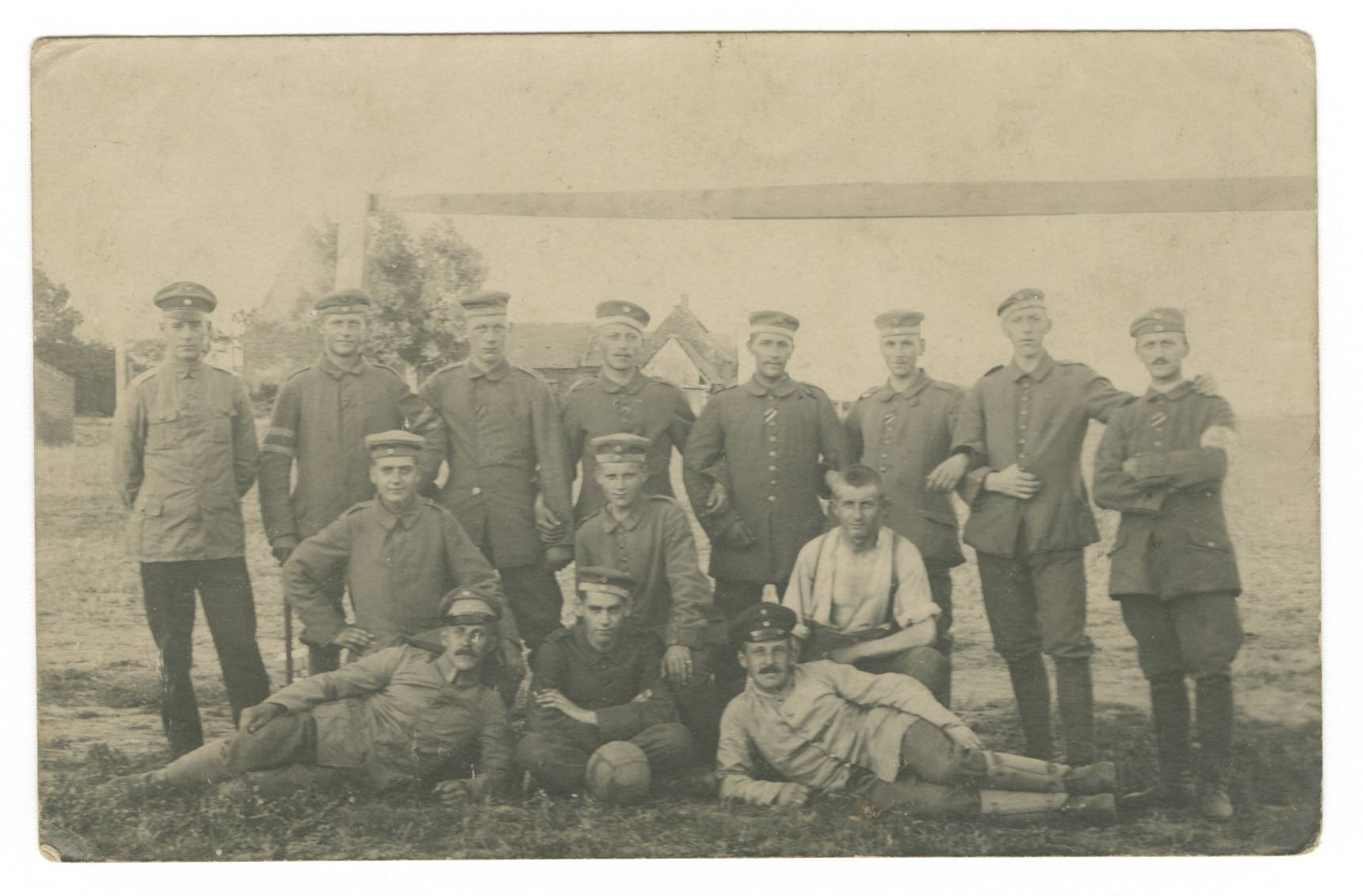
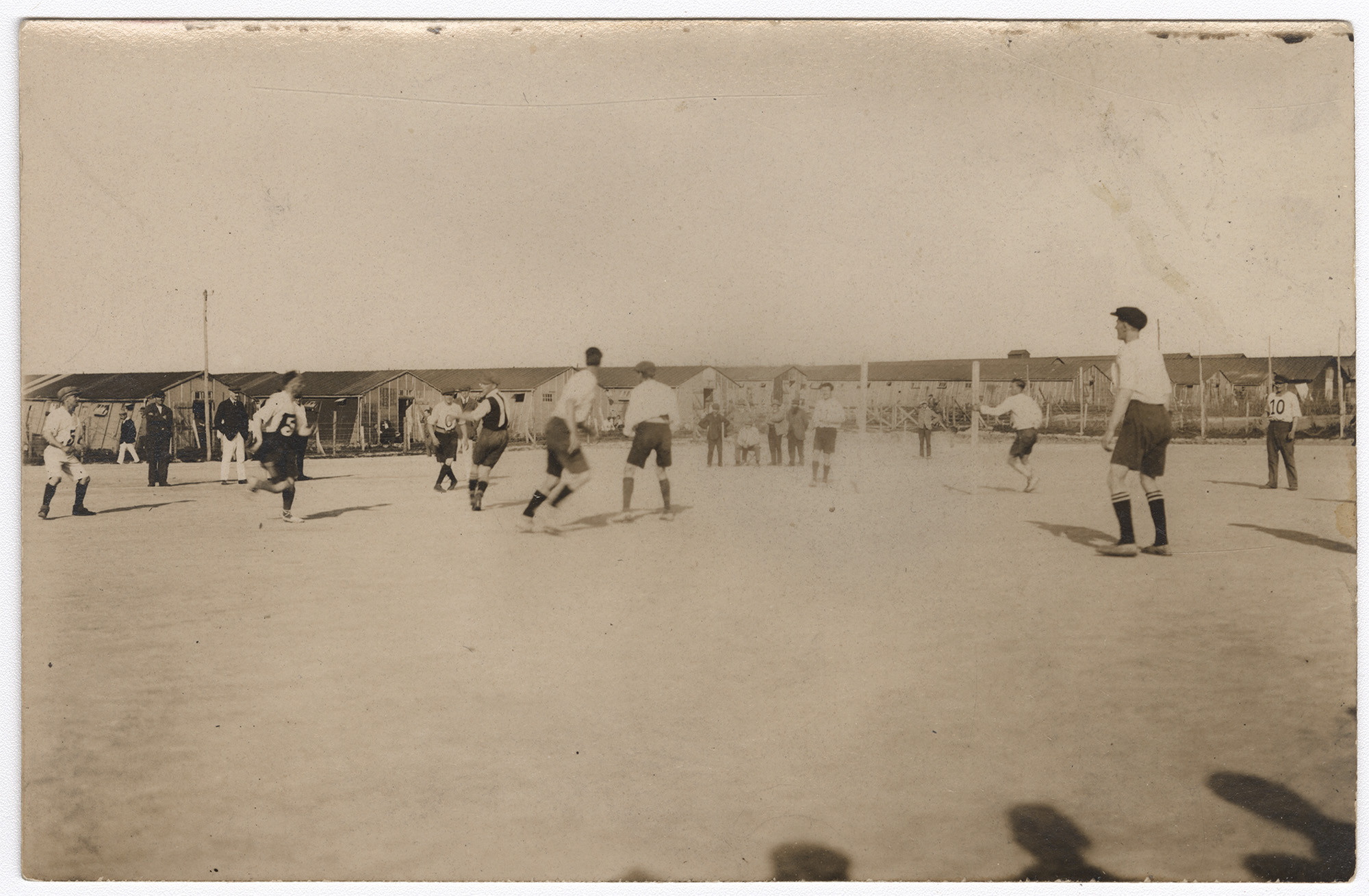
Whether people served on the frontlines or the home front, they turned to football for mental refuge from the hardships they faced.
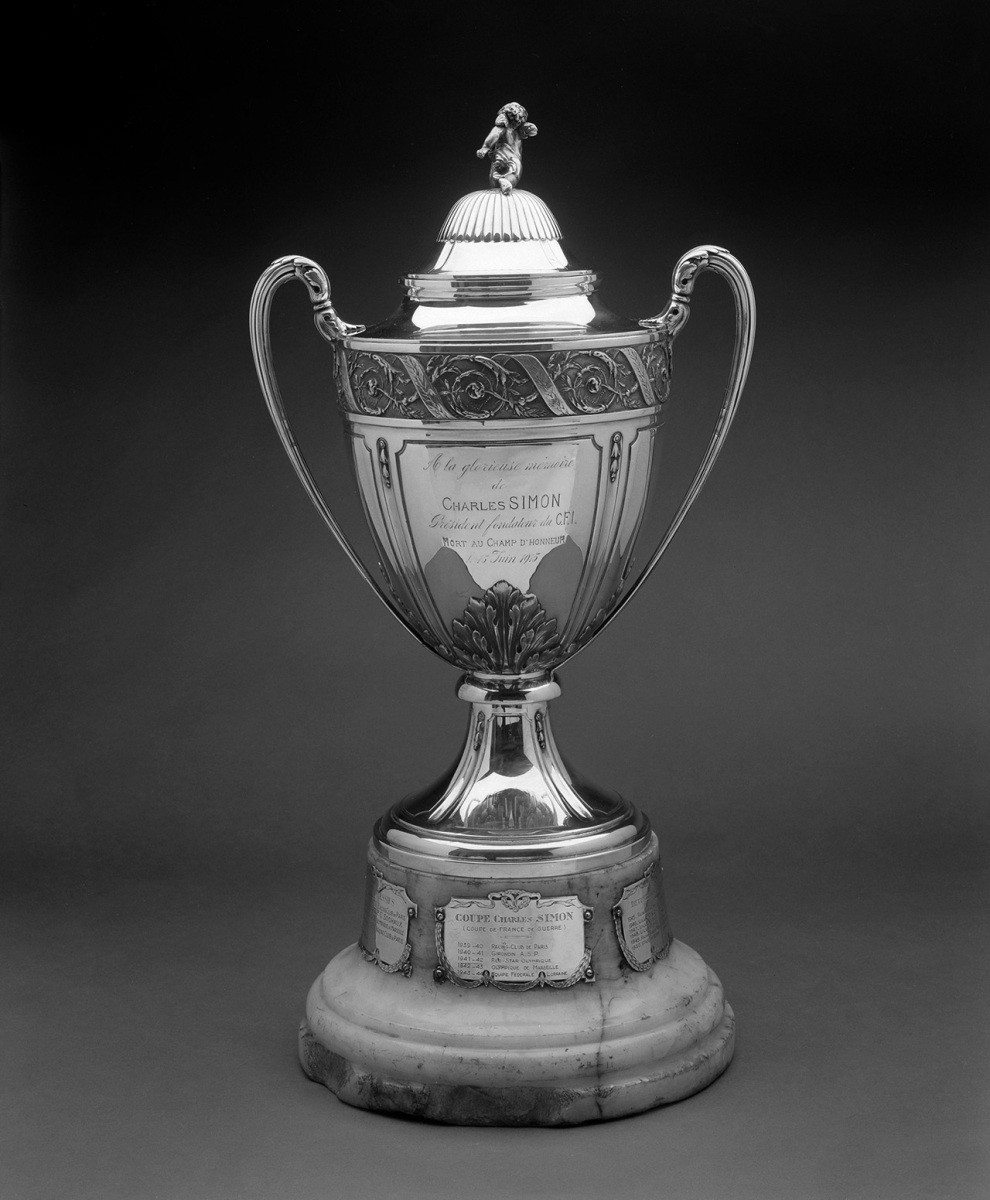
Original trophy of the Coupe de France national football tournament, first held in 1917.
From the collection of the French Football Federation


This project is supported in part by the City of Kansas City, Missouri Neighborhood Tourist Development Fund