Image
Ink drawing of a woman in a Greek robe holding the US flag and a wreath. A WWI-era doughboy stands in front of her. Calligraphy text: 'The Words that Bind Us'

The Words that Bind Us

Presented by Griffin Catalyst
Open Nov. 11, 2026 Lower Level Lobby

In 1787, the United States was in trouble: under the Articles of Confederation, the central government was weak and could not hold the states together. Congress called a special meeting to fix these problems. For four months, 55 delegates met in secret to argue over how to set up the government and how to balance power between large and small states.

On Sept. 17, 1787, the delegates approved the final document that would become the Constitution. Working through the night, the Philadelphia printers Dunlap & Claypoole printed 500 official copies for Congress and the states to read and ratify. Only 14 of these prints survive today.

  • Image
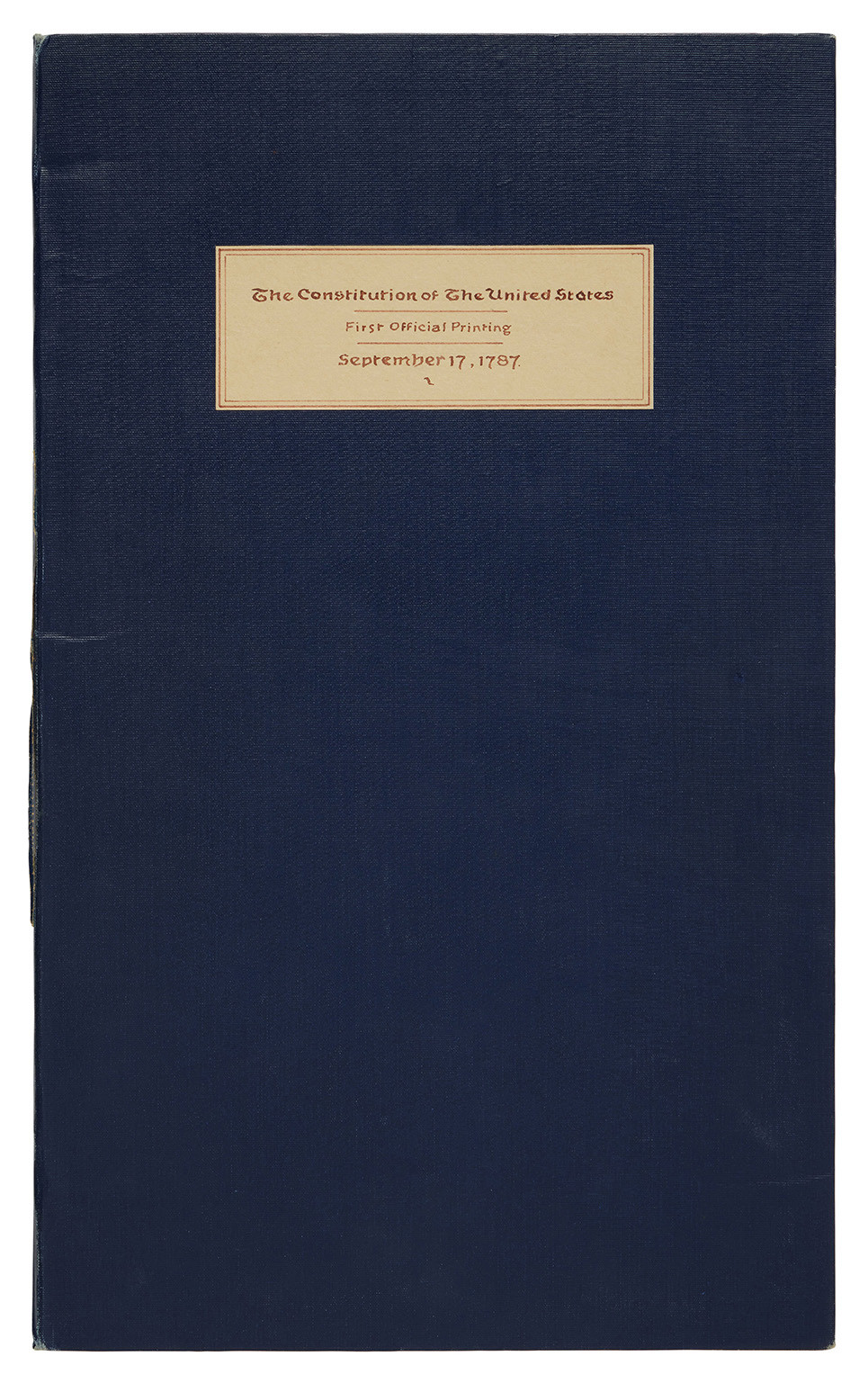
    Dark blue pamphlet cover labeled 'The Constitution of The United States / First Official Printing / September 17, 1787'
  • Image
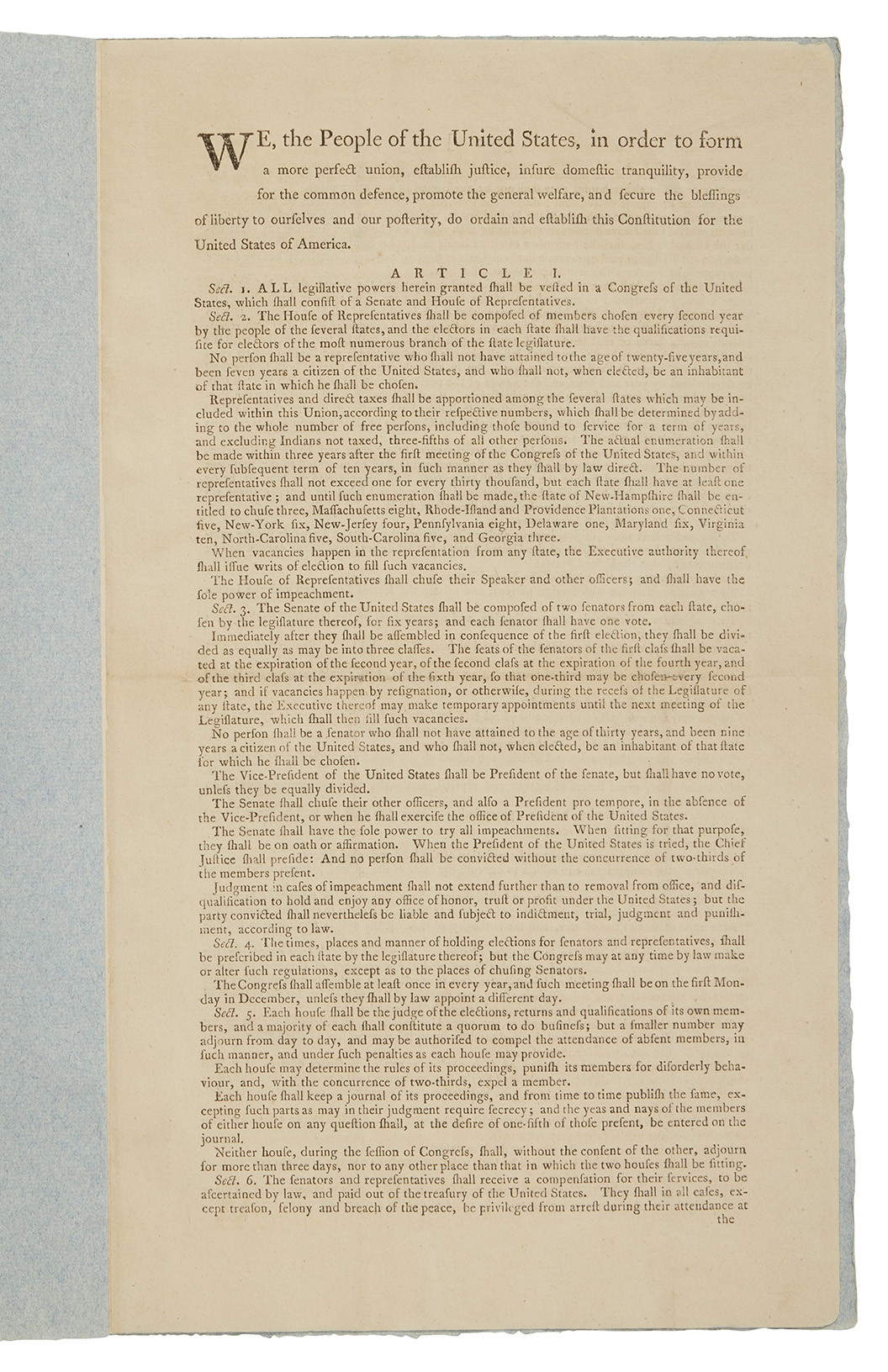
    Cream-colored page with closely printed text
  • “Official Edition” of the United States Constitution (Cover and first page)

    Printed by Dunlap & Claypoole, Sept. 17, 1787.

    Loan, Kenneth C. Griffin Collection
    Images courtesy of Sotheby's

The Constitution revolutionized American government. It replaced a weak confederation of states with a stronger national government. Above all, it rested on a bold idea: government gets its power from the people. Its first words, “We the People,” made clear that Americans would govern themselves.

Over a century later, the country again asked its citizens for great sacrifices. To understand why the cause was worth such a cost, Americans looked back to the nation’s founding. President Woodrow Wilson declared that “the world must be made safe for democracy.” Government posters, Liberty Loan drives, and pamphlets used symbols like the Liberty Bell and the 13-star flag to link 1776 to 1917.

These symbols represented ideals Americans had inherited. For many who answered the call, serving showed their belief in liberty and self-government, the ideas on which the nation was founded.
Generations of Americans have crossed oceans, faced great hardships and risked their lives to defend those ideals. The words printed in 1787 still bind us.

  • Image
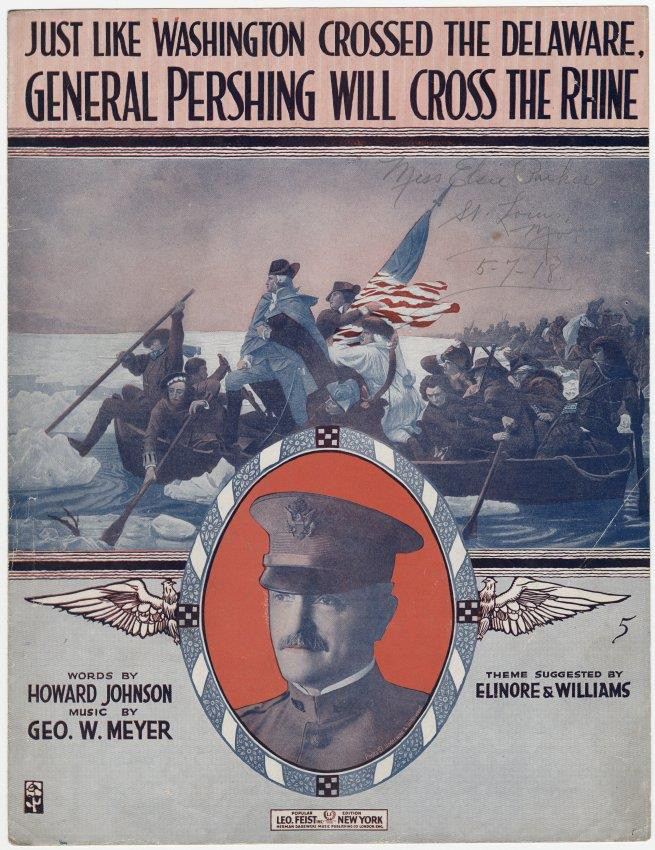
    Painting of George Washington crossing the Delaware with Revolutionary War soldiers rowing the boats. Inset, a portrait of General Pershing.
    Sheet music likening General Pershing crossing the Rhine to George Washington crossing the Delaware. Object ID: 1982.122.73 →
  • Image
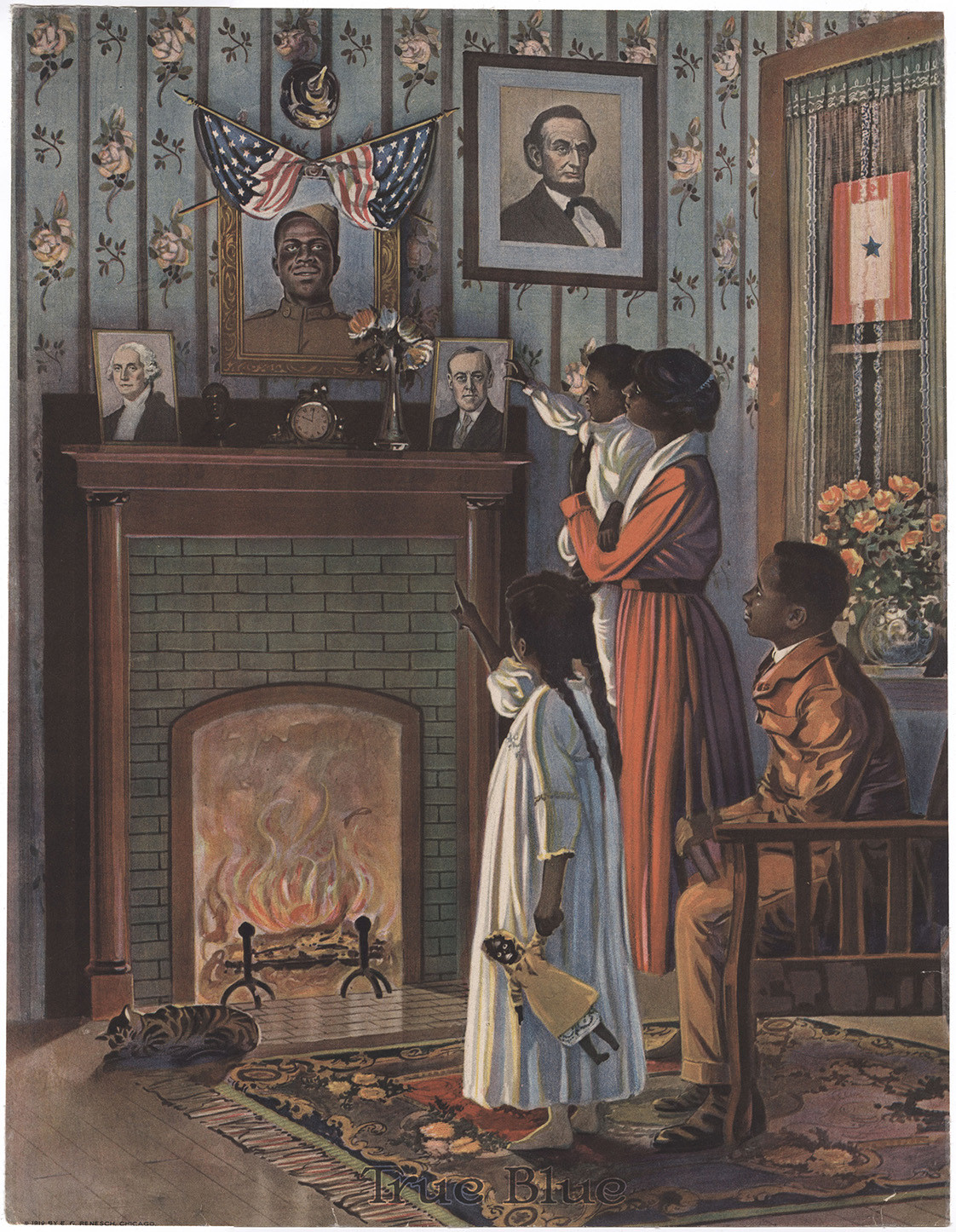
    Painting of a Black woman and three Black children in a sitting room with a fireplace. They are gazing toward a portrait of a Black WWI soldier on the mantel. Portraits of George Washington, Abraham Lincoln and Woodrow Wilson hang on the wall.
    Honoring the service of African Americans in the First World War, this poster features various patriotic images, including a portrait of George Washington. Object ID: 2023.129.1→ 
  • Image
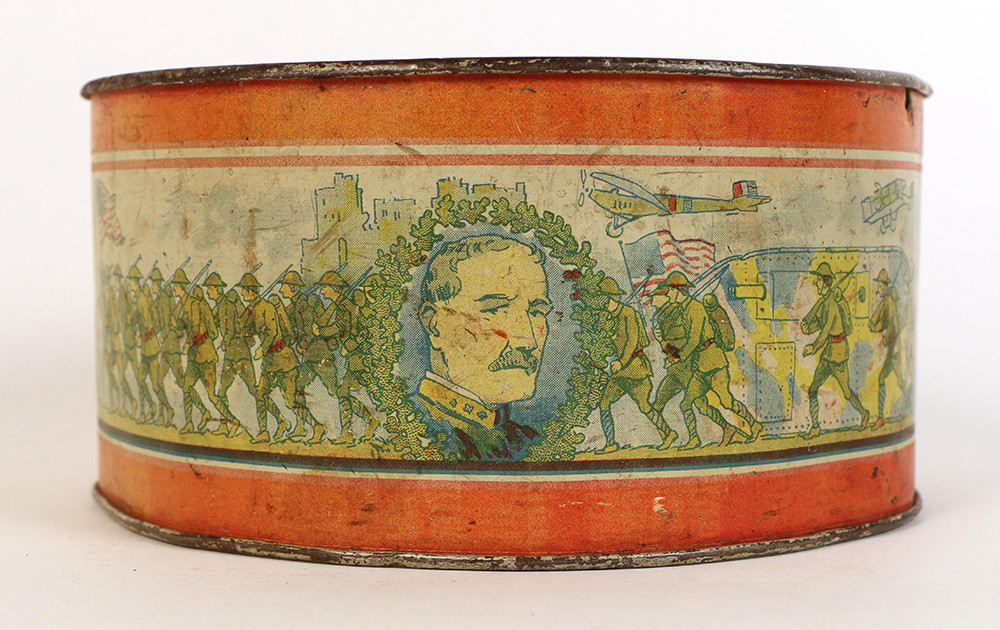
    Side view of a toy drum decorated with a portrait of a white man with a mustache and images of WWI doughboys marching.
    Toy drum featuring an illustration of General Pershing with marching doughboys.
    Image
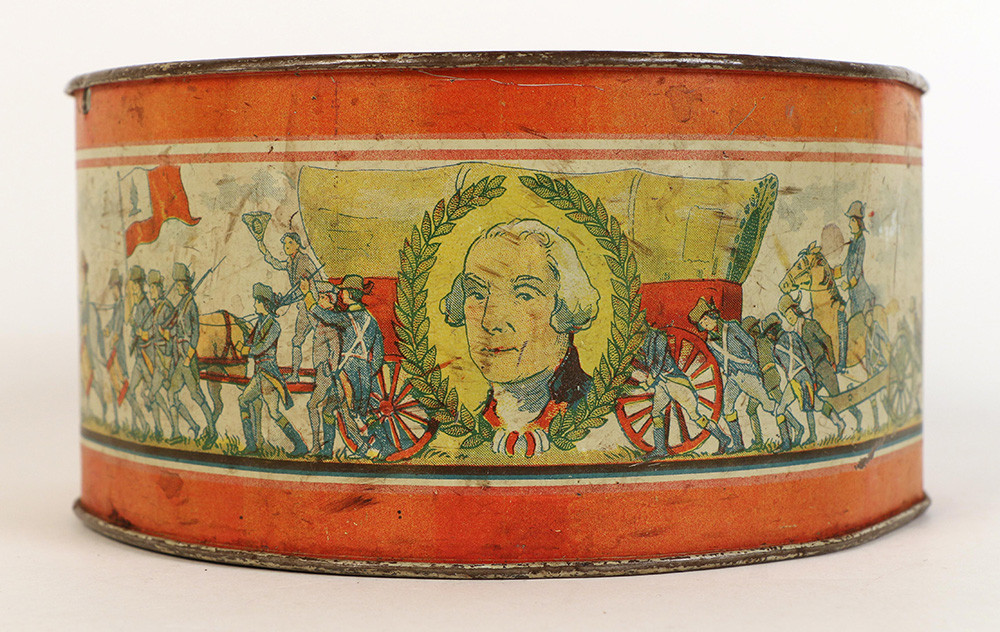
    Side view of a toy drum decorated with a portrait of a white man wearing a white wig and images of Revolutionary War soldiers marching
    On the opposite side, an illustration of George Washington is flanked by Revolutionary War soldiers. Object ID: 2016.102.1 →
Image
ticket

The Words that Bind Us opens Nov. 11, 2026.

Free timed ticket reservation required.


Reserve timed ticket →

Presented by


Image
Kenneth C. Griffin / Griffin Catalyst

Visit the Museum and Memorial